
Aquaculture Feed Conversion: The Key to Improving Farm Profitability
If there is one metric that every aquaculture farmer should understand, it is Aquaculture Feed Conversion Ratio (FCR). Whether you are farming barramundi, jade perch, prawns, or Australian Redclaw crayfish, feed costs are often a large expense on the farm. Understanding feed conversion ratio can help improve aquaculture profitability, reduce waste, increase growth rates, and make better management decisions. Many farmers focus on producing more fish, but successful operators understand that long-term profitability depends on producing fish and crustaceans efficiently. This is where aquaculture feed efficiency becomes critically important.
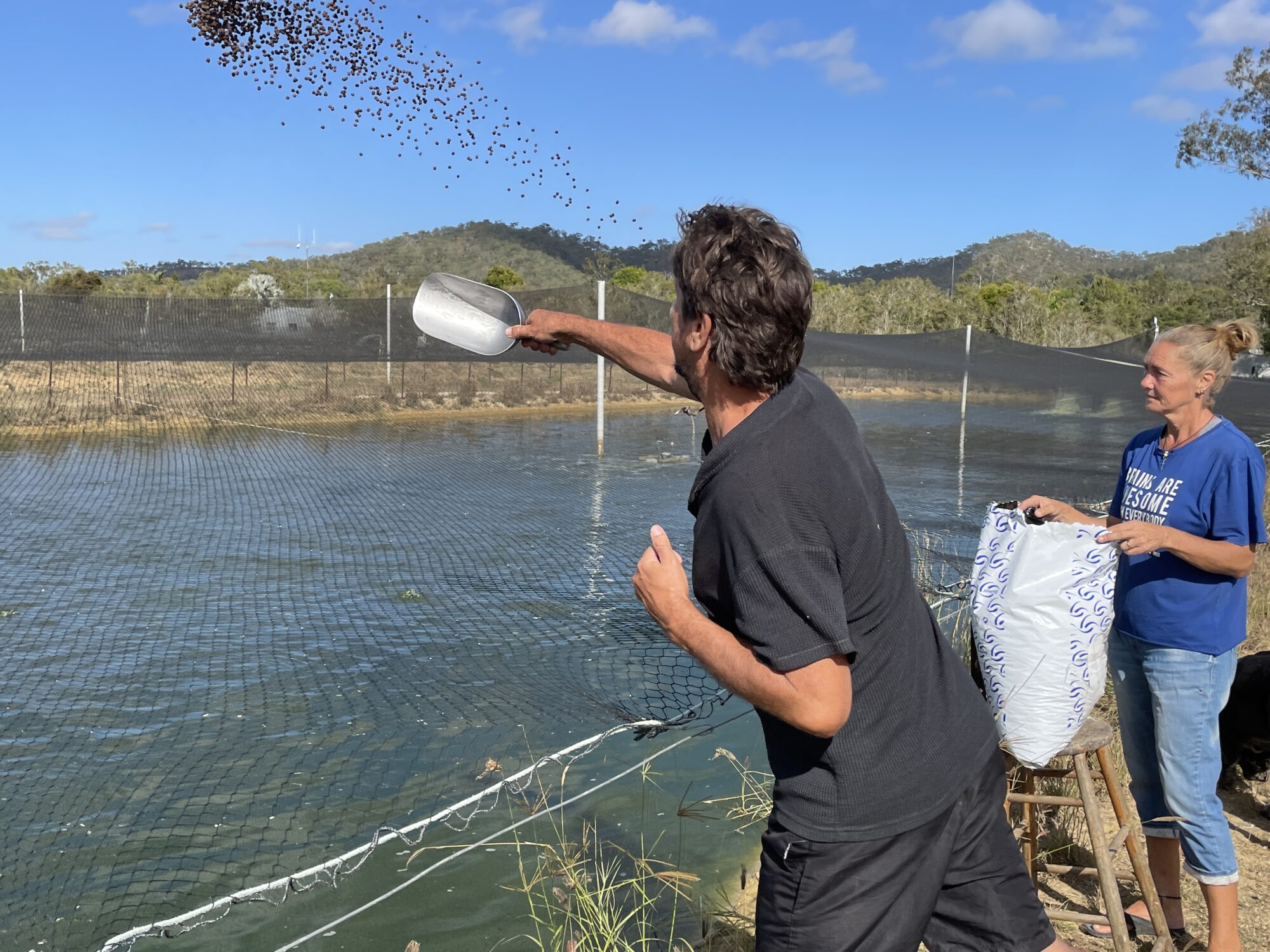
At Barron River Redclaw, we regularly monitor our Aquaculture feed conversion, water quality, growth rates, and production performance to improve profitability and sustainability on our commercial aquaculture farm in Far North Queensland. Learn more about our farm at www.BarronRiverRedclaw.com.au.
What is Aquaculture Feed Conversion Ratio Aquaculture?
Feed Conversion Ratio (FCR) measures how efficiently fish or crustaceans convert feed into body weight. The formula is simple:
FCR = Total Feed Fed ÷ Total Weight Gain
For example: If you feed 2 kilograms of pellets and your fish gain 1 kilogram of weight, your FCR is 2.0. This means it took 2 kilograms of feed to produce 1 kilogram of fish growth. In general:
Lower FCR = Better feed efficiency
Higher FCR = Increased production costs
Improved FCR = Better farm profitability
Understanding what FCR is in aquaculture helps farmers identify opportunities to improve performance and reduce unnecessary expenses.
Why Feed Conversion Ratio Matters
Feed on an aquaculture farm typically accounts for 40% to 70% of production costs in many commercial aquaculture systems. Even a small improvement in FCR can generate significant savings. Consider two farmers producing one tonne of fish:
Farmer A
FCR = 1.5
Feed required = 1.5 tonnes
Farmer B
FCR = 3.0
Feed required = 3 tonnes
Both farmers harvest the same amount of fish, but Farmer B spends substantially more on feed. This simple example highlights why fish farming profitability depends heavily on feed management and efficient production systems.
The Relationship Between Aquaculture Feed Efficiency and Profit
The most profitable farms are not always the farms producing the highest volumes. Often, the most successful farms are those with the best aquaculture feed efficiency. Efficient feeding results in:
- Lower feed costs
- Faster growth rates
- Better water quality
- Reduced environmental impacts
- Improved harvest yields
- Higher profit margins
For commercial operators, monitoring feed conversion ratio should be a routine part of aquaculture management.
Common Causes of Poor Feed Conversion Ratio
A poor FCR is often a warning sign that management practices need attention.
Overfeeding- Overfeeding is one of the most common causes of poor feed conversion. Excess feed settles on pond bottoms, decomposes, reduces water quality, and wastes money.
Poor Water Quality- Fish and crustaceans experiencing stress from low dissolved oxygen, high ammonia, or unstable water conditions often convert feed less efficiently. Maintaining excellent water quality is fundamental to sustainable aquaculture.
Disease and Health Issues- Animals under stress or suffering from disease often continue feeding but convert less feed into growth.
Incorrect Feed Selection- Feed size and nutritional content must match the growth stage of the stock. Using inappropriate feed can reduce growth rates and increase feed waste.
Excessive Stocking Density- Overcrowding increases competition and stress, reducing overall performance and feed conversion.
Feed Conversion Ratio in Redclaw Crayfish Farming
For anyone interested in Redclaw crayfish farming, understanding redclaw feed conversion ratio is equally important. Redclaw are unique because they consume a combination of formulated feed, algae, organic matter, microorganisms, and natural pond productivity. This can make calculating precise feed conversion more difficult than in highly intensive fish farming systems. However, monitoring feed inputs against harvest weights still provides valuable information about production efficiency and overall farm performance. In commercial Redclaw farming Australia systems, producers generally strive for:
Excellent FCR: 1.5 – 2.0
Good FCR: 2.0 – 2.5
Poor FCR: Above 2.5
If feed conversion begins to deteriorate, farmers should investigate factors such as water quality, feed management, stocking density, habitat availability, and animal health. Our team at Barron River Redclaw has been actively researching and refining commercial Redclaw production systems in Far North Queensland. Through practical farm experience, ongoing trials, and farmer education, we help producers better understand the factors that influence growth, survival, and feed efficiency. Visit www.BarronRiverRedclaw.com.au to learn more about our farm, products, and educational opportunities.
Practical Ways to Improve Feed Conversion Ratio
Improving FCR is often more about management than purchasing expensive feeds.
- Monitor Water Quality Daily
- Healthy water supports healthy growth.
- Monitor:
- – Dissolved oxygen
– pH
– Temperature
– Ammonia
– Alkalinity
– Use Feed Trays or Feeding Stations- Feed trays help farmers monitor feed consumption and reduce waste.
Keep Accurate Records
Track:
- Feed inputs
- Growth rates
- Mortalities
- Water quality
- Weather conditions
Good records help identify trends before they become costly problems.
Match Feed to Animal Size
Different growth stages require different nutritional requirements and pellet sizes.
Reduce Stress
Stable environmental conditions improve growth rates and overall feed conversion.
Feed Conversion Ratio and Sustainable Aquaculture
Modern sustainable aquaculture requires farmers to maximise production while minimising waste. Improving FCR benefits both profitability and environmental performance. Better feed conversion means:
- Less wasted feed
- Lower nutrient loads
- Improved water quality
- Reduced environmental impacts
- Better resource efficiency
For farms seeking long-term success, improving feed efficiency should be a core management objective.
Final Thoughts
Understanding Aquaculture Feed Conversion Ratio is one of the most effective way to improve farm performance. Whether you are producing fish, prawns, or engaging in Redclaw crayfish farming, aquaculture FCR provides valuable insight into how efficiently your operation is converting feed into saleable product. The most successful aquaculture businesses do not simply feed more- they feed smarter. By monitoring aquaculture feed conversion ratio, improving water quality, reducing waste, and implementing sound aquaculture feeding strategies, farmers can increase profitability, improve sustainability, and build stronger businesses for the future.
Learn More About Redclaw Farming
If you’re interested in learning more about Redclaw crayfish farming, redclaw feed, aquaculture feed efficiency, and practical strategies to improve farm profitability, we invite you to connect with us. At Barron River Redclaw, we offer:
✅ Commercial Redclaw crayfish production
✅ Live Redclaw sales
✅ Farm tours and educational experiences
✅ Redclaw farming training and mentoring
✅ Aquaculture consulting services
✅ Food security and sustainable farming education
Visit: 🌐 www.BarronRiverRedclaw.com.au/contact
Whether you’re a backyard hobbyist, aquaponics enthusiast, farmer, investor, student, or commercial producer, we’re passionate about helping people build successful and sustainable aquaculture enterprises. The next time you feed your fish or crayfish, ask yourself:
Is every kilogram of feed contributing to growth and profit? If not, your Aquaculture Feed Conversion Ratio may be telling you something important.