
The Australian Redclaw Opportunity is something I have become deeply passionate about because it sits at the intersection of food production, small-scale farming, aquaponics, practical enterprise and better decision-making.
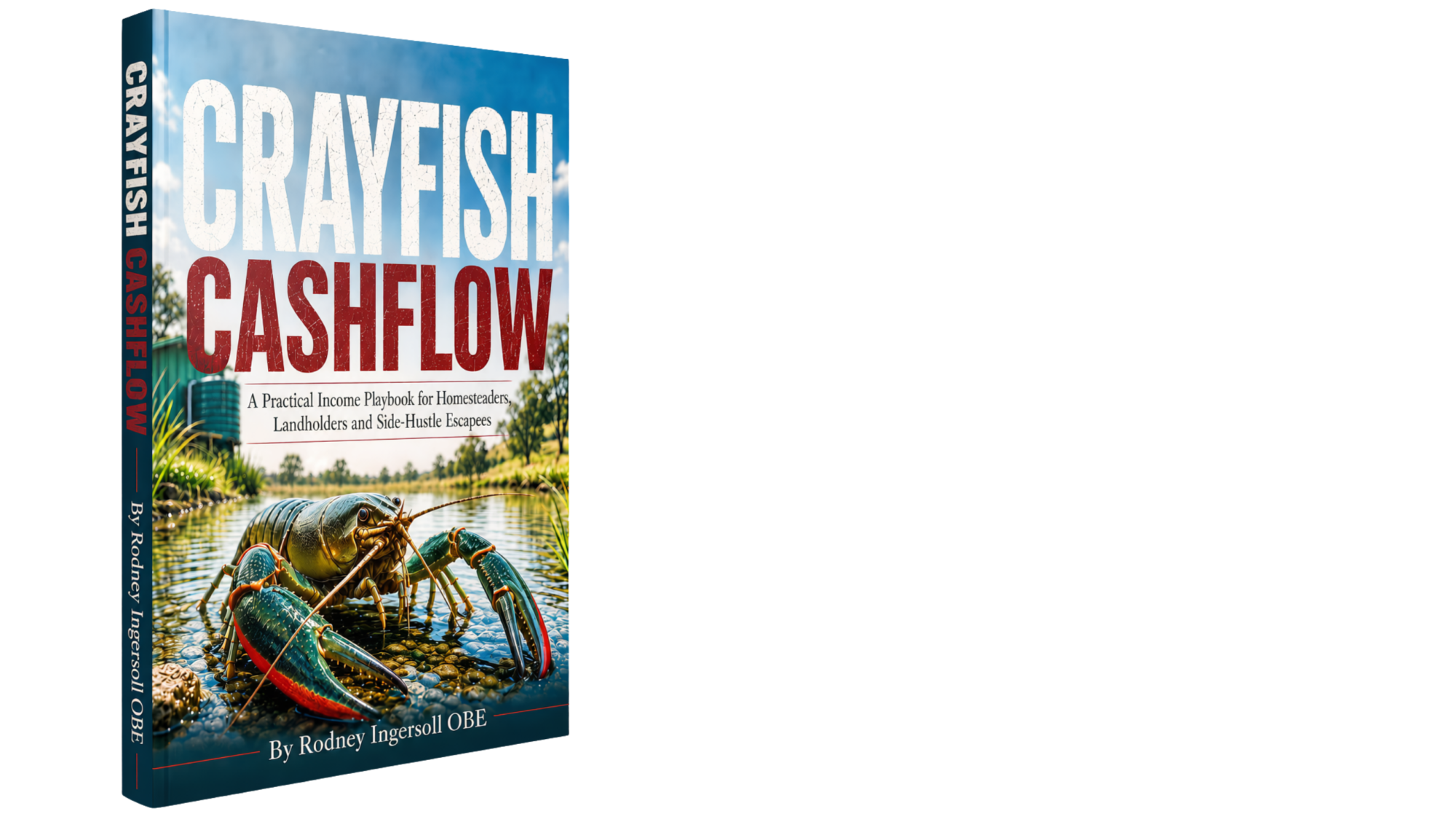
I’m excited to share that my new ebook and audiobook, Crayfish Cashflow, is now available for instant download.
This book has grown out of years of hands-on experience, mistakes, problem-solving and practical lessons from running Barron River Redclaw in Far North Queensland. It brings together what I have learned about Australian Redclaw Crayfish, small-scale aquaculture, backyard food production and the importance of thinking carefully before spending money on ponds, tanks, pumps, stock or equipment.
Redclaw are known by several different names, which can sometimes confuse people when they first start researching the species. Their scientific name is Cherax quadricarinatus, but they are commonly called Australian Redclaw Crayfish, Redclaw Crayfish, Redclaw, Queensland Redclaw, tropical freshwater crayfish or freshwater crayfish. In some countries, people may also use broader local names such as freshwater lobster, tropical blue crayfish, blue lobster, crawfish, crawdad or crawdaddy.
In Australia, people often understand the difference between yabbies and Redclaw, but overseas those terms can become blurred under more general crayfish or crawfish language. In this book, I mostly use the terms Redclaw and Australian Redclaw Crayfish because they are simple, clear and point back to the species’ Australian origin. Whatever name is used, the important thing is to understand the animal properly before building a system around it.
My interest in freshwater crayfish did not begin recently. I have been keeping and learning from freshwater crayfish since I was a kid growing NSW yabbies. Later, I set up many Redclaw in aquaponics systems in Far North Queensland and Torres Strait and even kept Redclaw in tanks while living in Papua New Guinea. Those experiences gave me a long, practical relationship with crayfish before I ever stepped fully into commercial Redclaw farming.
So this book is not just based on one farm or one season. It comes from years of watching, testing, failing, learning and slowly understanding how these animals fit into food production, aquaponics and small-scale farming systems.
The book also includes practical case studies and lessons from people who have sought my knowledge and advice over the years. These are drawn from real conversations, farm visits, aquaponics projects, consulting work, training sessions and the many questions people have asked me about Redclaw, aquaponics, food production and starting wisely.
I included these because theory is never enough on its own. Sometimes the clearest lessons come from watching what real people are trying to build, where they get stuck, what they overlook, and what they need to understand before they spend too much money or make the wrong first move.
What has encouraged me most is that many would-be farmers, backyard growers, aquaponics enthusiasts and curious food producers have already taken up the book thinking about what redclaw opportunies are available. I am genuinely grateful to see my own life lessons helping others think more clearly about whether the Australian Redclaw Opportunity could be right for them.
Crayfish Cashflow is not a technical farming manual for established commercial farmers. It is also not a get-rich-quick promise. It is written for everyday people who may be wondering whether Australian Redclaw Crayfish could become a realistic food, farming or sideline income opportunity from a backyard, aquaponics system, shed, fish tank, dam or small property.
The book helps readers slow down and assess the Australian Redclaw Opportunity properly. It looks at practical questions around land, water, local rules, budget, market demand, buyer conversations, lifestyle and risk. In my view, those questions need to come before the spending starts.
Australian Redclaw are a fascinating species, but they are still a living animal. They need good water, good systems, good planning and good decision-making. My goal with this redclaw book is to help people avoid rushing in with excitement and instead take a wiser first step before they rush out and build a redclaw farm.
If you are interested in growing your own food, exploring small-scale aquaculture, learning about Redclaw, or simply thinking about a practical real-world opportunity outside the usual online side hustles, this book may help you decide whether the opportunity is genuinely right for you
You can read more about the ebook and audiobook and buy here: https://book.australianredclaw.com
Thank you again to everyone who has supported my family, our farm and the work we are building through Barron River Redclaw. Every book purchased helps us continue turning hard-earned lessons into something useful for others and helps more people understand the Australian Redclaw Opportunity before they take their next step.